
Cat Dental Health · Finance
The $1,200 Wake-Up Call:
What Cat Dental Disease Is Really Costing You
Most cat parents assume their cat's teeth are fine. Vets see a very different picture.

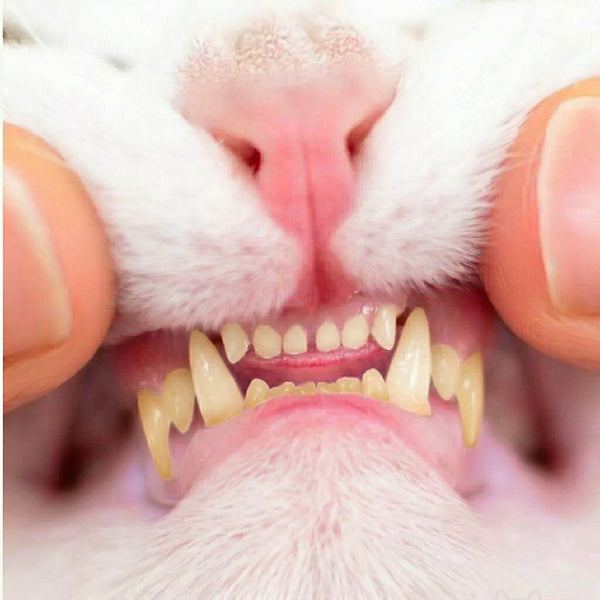
There's a moment every cat owner dreads. You're at the vet for a routine check-up and the vet pauses: "Her teeth are in rough shape. We're going to need to schedule a cleaning."
Then they hand you the estimate. $800 to $1,500 — sometimes more — for general anaesthesia, a full day at the clinic, and a recovery period during which your cat will judge you from across the room.
The Compounding Problem Nobody Warns You About
Plaque hardens into tartar within 24 to 72 hours. Once it becomes tartar, no treat, rinse, or spray can remove it — only a veterinarian with a scaler and your cat under anaesthesia. While it builds, bacteria attack the gumline: inflammation, infection, tooth root exposure, potential extractions.
"The vet said three teeth needed extracting. She's four years old. I had no idea it had gotten that bad — she was eating fine the whole time. The bill was $1,400."
— Sarah M., verified cat parentWhy Your Cat's Breath Is Trying to Tell You Something
Bad breath is usually the first sign of active dental disease. Research confirms cats continue eating normally even with severe periodontal disease. By the time a cat stops eating, the situation has often been progressing for months or years.
The Prevention Math — and Why Nobody Does It
Professional cleaning every 1–2 years: $800–$1,500. A daily routine your cat actually engages with: a few pounds a month. The problem is that "prevention" has historically meant the toothbrush — and only 4% of cat owners manage daily brushing.
What Actually Works: Mechanical Contact Time
Plaque removal requires sustained physical scrubbing. Dental treats are consumed in 2–5 seconds. Silvervine sticks trigger a hardwired neurochemical response producing voluntary chewing sessions of 15 to 30+ minutes. The fibrous wood maintains surface contact with teeth the entire time.